Why I Finally Trusted Fake Floral Hacks to Look This Real
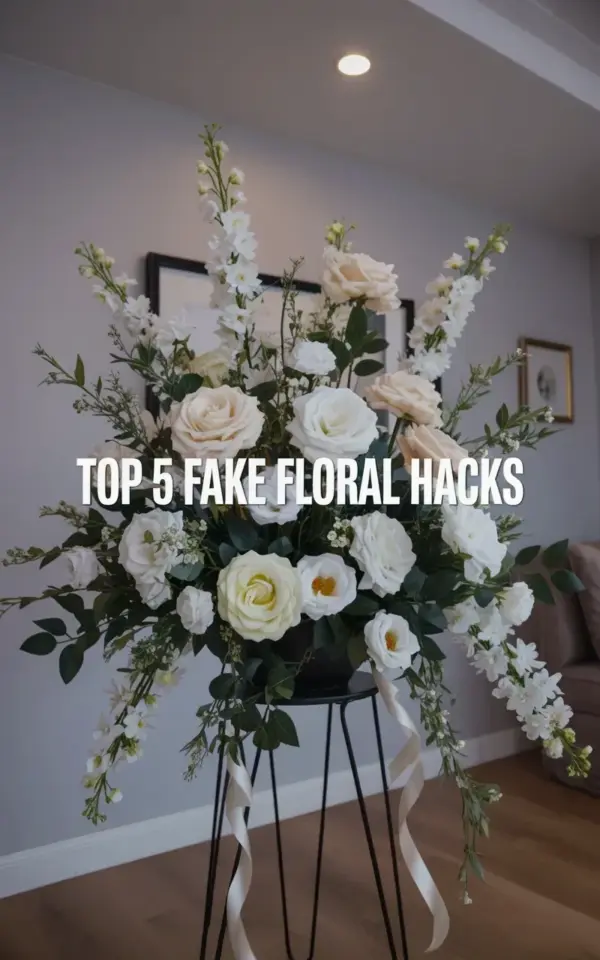
I have bought so many artificial flowers over the years that looked plastic, stiff, and honestly disappointing. But these 5 fake floral hacks changed everything for me. The arrangement you see here uses white roses and delphinium on a simple black hairpin stand, and people actually ask me if the flowers are real. That never happened before. The key was not buying more expensive flowers, but using simple tricks to make them behave like fresh stems.
This particular design sits against a light gray wall with a recessed ceiling light shining down on it. The contrast between the dark green foliage and the pale blooms creates a look that feels intentional and expensive. If you have struggled with faux flowers looking fake, these tips are for you.
How I Picked the Right Artificial Flowers for Cascading
Not all fake flowers work for a cascading arrangement. I learned this the hard way after buying a bundle of roses that refused to bend downward. For this project, I used white faux roses with flexible stems and delphinium spires that had a natural droop. The stems on the delphinium were wire wrapped, so I could curve them into a gentle waterfall shape.
When you shop for artificial flowers for a cascading arrangement, look for these features:
- Stems with internal wire that holds a bend without snapping back
- Flower heads that are not too heavy, or they will pull the stem straight
- Delphinium, wisteria, or trailing ivy styles that naturally hang
- Lighter colored blooms that reflect light softly, not glare like plastic
I chose white and cream tones because they catch the light from that overhead recessed fixture in a way that mimics real petals. The delphinium spires add height and movement, which is essential for a natural looking cascade.
Using a Black Stand to Anchor a Delicate Design
The black hairpin style stand in this photo does more than just hold the arrangement. It grounds the visual weight of the cascading flowers. A light colored stand would compete with the white blooms. The dark frame disappears visually, making the flowers appear to float downward.
I bought this stand from a local home goods store for under 20 dollars. It is simple, minimal, and does not distract from the floral arrangement. If you want to try this hack, look for a stand that has a narrow profile. A bulky stand will make even the best faux flowers look cluttered. The clean lines of the black metal let the cascading shapes take center stage.
Mixing Textures So Your Artificial Flowers Feel Real
One of the biggest mistakes I made with earlier projects was using only one type of flower. Real arrangements have varied textures. In this design, the large roses are smooth and full, while the delphinium spires are delicate and airy. The contrast between those two textures makes each flower stand out.
I also added a few smaller filler blooms that have a slightly matte finish. Glossy flowers always look fake. To test this, hold your faux flower next to a real one from the grocery store. If it shines too much, you can dull it with a light dusting of cornstarch or matte spray. I did this for the roses in this arrangement and it made a huge difference in the photos against the gray wall.
Dark Foliage Is the Secret to Depth in Faux Arrangements
This is the hack that I recommend to everyone. The dark green foliage in this arrangement is not an afterthought. It is what gives the whole piece depth. Without it, the white flowers would look flat and two dimensional against the light wall. I used artificial eucalyptus stems and dark ivy leaves that hang down and break up the lines of the cascade.
The foliage serves another purpose too. It hides the mechanics. Where the stems connect to the foam or the base, the dark leaves cover the gaps. I tucked several sprigs of dark greenery around the top of the black stand and let a few trail downward alongside the flowers. This creates a seamless transition from the container to the cascade.
When you choose foliage for your faux floral arrangement, pick leaves that have variation in shade. Some dark green, some olive, some almost black. That variation makes the eye read the foliage as organic rather than artificial.
The Ribbon Trick That Makes Cascading Look Natural and Unforced
The white ribbons flowing down from this arrangement are not just decorative. They serve a structural purpose. Real cascading flowers do not stop abruptly. They have a soft, tapered end. The ribbons extend the line of the cascade so the arrangement feels like it is still moving downward, even at the bottom edge.
I used a wide, matte white ribbon that matches the tone of the roses. I cut two lengths about 18 inches long and curled them slightly with my fingers before tucking them into the foliage. The ribbon picks up light from the overhead fixture and echoes the shape of the delphinium spires. This simple addition cost almost nothing but makes the entire arrangement look intentional and polished.
If you try this at home, avoid shiny polyester ribbon. It reflects light unevenly and looks cheap. A cotton or linen blend ribbon with a soft drape works best. Tuck it deep enough into the foliage so it looks like it is growing out of the arrangement, not tied on as an afterthought.
Arranging Faux Flowers in Layers for a Professional Finish
I built this arrangement in three layers. The back layer has the tallest delphinium spires angled slightly outward. The middle layer holds the largest roses at staggered heights. The front layer uses smaller blooms and trailing foliage that leans forward and downward. This layered approach stops the arrangement from looking flat.
Work from the back to the front. Start with your tallest stems and let them lean back slightly. Then add the mid height flowers, rotating the stand as you go. The final layer is where you add the cascade. I curved the delphinium stems downward by bending the wire slowly, a little at a time, so they did not kink. The white ribbons were added at this stage, tucked under the front blooms.
Test the arrangement from different angles. The light gray wall behind this arrangement makes the white flowers pop, but the dark foliage is visible from the sides too. A good cascading arrangement should look balanced from every view, not just the front.
Where to Display Your Faux Floral Stand for the Best Effect
This specific arrangement lives in a corner of my living room near a window, but it works just as well against a neutral wall. The recessed ceiling light above it creates a soft halo effect that mimics natural sunlight. If you do not have a recessed light, place a small floor lamp nearby to cast light on the flowers from above.
Black stands look best against light backgrounds. The contrast makes the foliage look deeper and the flowers look brighter. I have also seen similar arrangements on dark wood credenzas, but the black stand risks blending in too much on a dark surface. A light wall gives the whole piece room to breathe.
This project took me about 45 minutes from start to finish, and the materials cost less than 60 dollars total. The best part is that it will look exactly the same a year from now. No watering, no wilting, no petals dropping on the floor.
If you have been hesitant to try artificial flowers because they rarely look real, start with these specific hacks. Pick a simple black stand, choose flexible stems that allow cascading shapes, and do not skip the dark foliage or the ribbon trick. These small changes made all the difference for me and I think they will for you too.
Save this post for your next DIY project and give it a try. You might surprise yourself with what you can create.
#fakefloralhacks #artificialflowers #floralarrangement #homedecorhacks #fauxflowers
Leave a Comment